
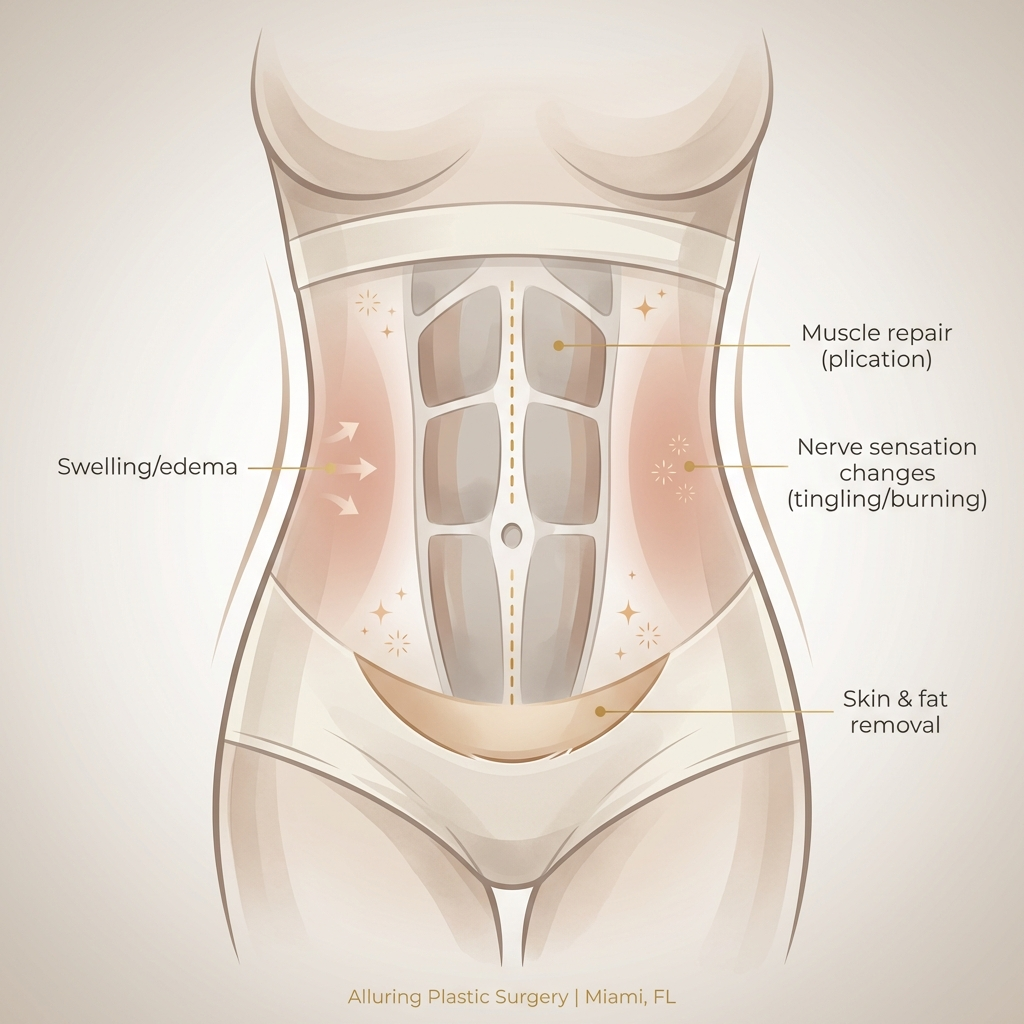
Recovering from a tummy tuck involves giving the body time to heal while following post-procedure care instructions. During recovery, patients may experience swelling and temporary changes in daily activities as the abdominal area heals. Here is an overview of what to know about tummy tuck recovery:
Managing Early Recovery
The first few weeks after a tummy tuck generally require rest and support. Patients often go home the same day or after a short hospital stay, and they need an adult to drive them home and help with daily tasks for several days. You may notice swelling, bruising, tightness, and abdominal soreness, which surgeons commonly expect after this procedure. Your surgeon may prescribe pain medication and explain when to take it.
Some surgeons place small drains near the incision to collect excess fluid. Your care team will show you how to empty the drains and record the fluid amounts, then remove them once the output decreases. Prepare your home before surgery so you can rest without searching for supplies. Keep loose clothing, extra pillows, and prescribed medications within easy reach.
Following Care Guidelines
Your surgeon will provide specific guidelines for movement, wound care, and daily routines. These instructions vary by patient, and they may change as healing progresses. Following them closely helps protect the tummy tuck incision while your body adjusts.
Activity Restrictions
Short walks around the home commonly begin within the first day or two after surgery. Surgeons often encourage light walking, but you should avoid lifting heavy objects, bending, or straining the abdomen for several weeks. Some people return to desk work after about two weeks, although physically demanding jobs may require more time off. Your surgeon will tell you when you can resume exercise.
Incision and Garment Care
Some surgeons ask patients to wear a compression garment for several weeks after a tummy tuck. The garment applies gentle pressure to the abdomen, and surgeons use it to help manage swelling. Keep the incision clean and dry, and follow your surgeon’s bathing instructions until the care team approves full showers. Your surgeon will probably ask you to avoid nicotine products before and after surgery.
Tracking Healing and Progress
Healing after a tummy tuck happens gradually over several months. Swelling often decreases noticeably within the first six weeks, but some residual swelling may last three to six months or longer. Photos taken at regular intervals can reveal changes that are hard to notice day to day. Keep a log of your energy levels, comfort, and activity so you can share accurate details at follow-up visits. Follow-up appointments allow your surgeon to check the incision and monitor your progress. Attend every scheduled visit, and bring a list of questions about your activity level or scar care.
Watching for Recovery Concerns
Patients often recover without major problems, but knowing which signs need attention helps you respond quickly. Contact your surgeon if you notice any of the following:
- Fever or chills: A temperature above 101°F warrants a call to your care team.
- Spreading redness or warmth: Redness that extends around the incision or skin that feels hot deserves prompt attention.
- Unusual drainage: Report cloudy, foul-smelling, or excessive fluid from the incision or drains.
- Sudden swelling on one side: Firm or rapid swelling in one area may point to fluid buildup.
- Breathing problems or leg pain: Chest pain, shortness of breath, or calf pain and swelling require emergency care right away.
Schedule Your Tummy Tuck Appointment
Recovering from a tummy tuck requires careful attention to post-operative care. Watch for signs of complications such as unusual drainage, localized swelling, or difficulty breathing to support a safe recovery. Keeping your surgeon’s after-hours contact information accessible allows for prompt communication if concerns arise. Contact a qualified plastic surgeon near you to schedule your tummy tuck appointment today.

