
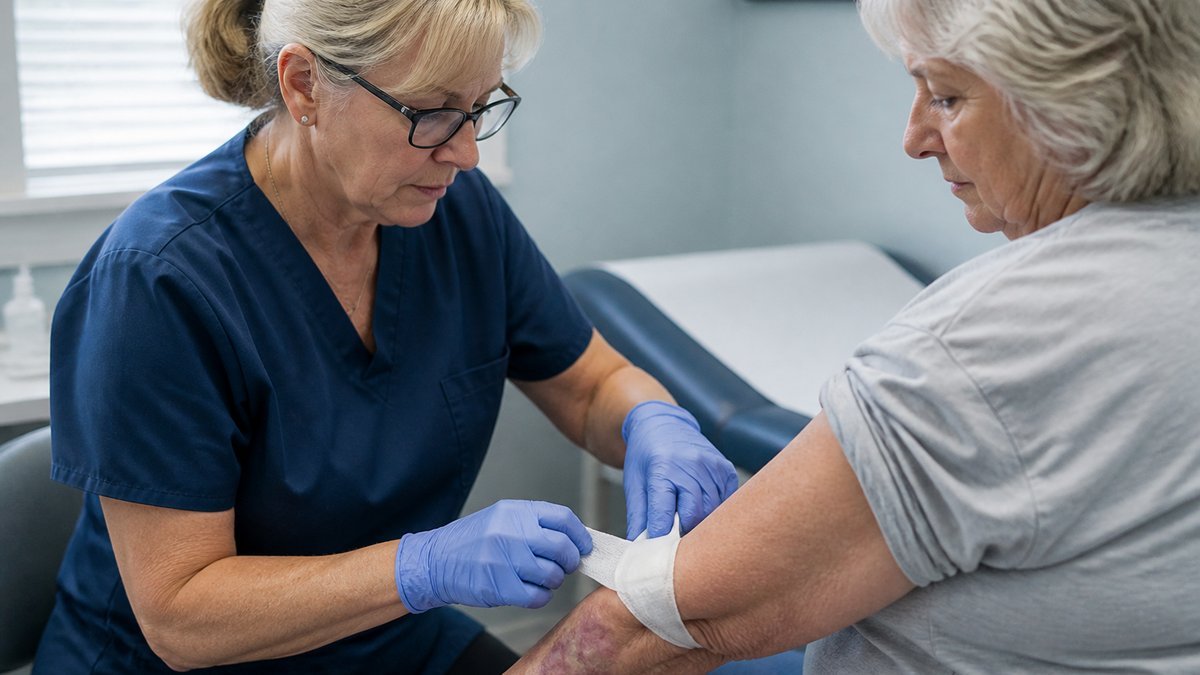
Venous ulcers usually form on the lower leg near the ankle. These wounds develop because of poor blood flow in the leg veins. They can heal slowly, and they will return without ongoing care. When you understand the cause, treatment steps make more sense.
Causes of Venous Ulcers
Your leg veins carry blood back to your heart. Small valves inside the veins keep blood moving upward. When these valves weaken, blood will pool in the lower legs, and pressure builds inside the veins. High pressure can damage the skin, and a small injury will turn into an open wound. Several factors raise your risk of developing venous ulcers:
- History of blood clots: If you have had a deep vein thrombosis (DVT), your veins may have lasting damage.
- Varicose veins: Weakened or enlarged veins make it harder for blood to move upward.
- Leg injuries: Earlier damage to your leg affects circulation in the area.
- Periods of standing or sitting: If you sit for long hours at work, your calf muscles move less. Blood flow in your legs slows.
- Age and family history: Both play a role in how well your veins function.
- Obesity: Extra body weight puts more pressure on the leg veins and makes it harder for valves to work.
- Pregnancy: Pregnancy can increase pressure in the leg veins.
Symptoms of Venous Ulcers
Recognizing them early gives you a better chance to act before an ulcer develops. It helps to track when your symptoms appear and how long they last. Note whether they improve when you elevate your legs or walk, and discuss whether they worsen at certain times of day. This information is useful for your provider, and it can help guide your care plan. If you notice any of these symptoms regularly, mention them at your next appointment, and ask whether a vein evaluation makes sense for you.
Treatments for Venous Ulcers
Venous ulcers can be painful, and pain makes it harder to stay active or follow your care plan. Your provider may review your history of pain relief medications to understand what you have already tried. This may include nonsteroidal anti-inflammatory drugs, or NSAIDs. This helps reduce both pain and inflammation around the wound.
Compression Stockings for Pressure
Graduated medical-grade compression stockings are a common part of venous ulcer care. This pattern helps push blood upward, and it can reduce swelling. Because sizing matters, your provider may measure your legs. Compression stockings come in different pressure levels, and your provider will recommend the level that fits your condition.
Elevation for Swelling
Elevating your legs helps reduce swelling and support blood flow back toward your heart. Raise your legs above the level of your heart for short periods during the day. Lie on a couch, and you can prop your feet on two or three firm pillows. When swelling is an issue, elevate your legs when possible, and keep them raised while you rest. If your job requires long periods of sitting, set a reminder to raise your legs when you can.
Schedule Venous Ulcers Evaluations
Venous ulcers need consistent care. Compression, elevation, walking, and pain management can work together as part of one plan. Each step plays a role, and your provider will adjust the plan over time. If you notice new symptoms or a wound that is not healing, contact your provider.