
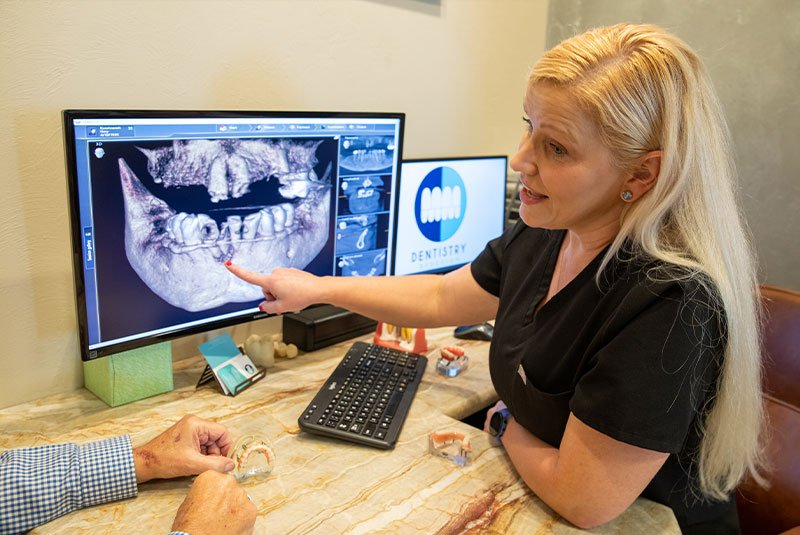
Dentists help identify and manage sleep apnea, which is a common sleep disorder linked to airway obstruction. They conduct oral examinations and patient screenings; through these assessments, dentists detect warning signs and provide custom-made oral appliances that support better breathing and sleep quality. Here is more information on how dentists identify and treat sleep disorders:
What Is a Dentist?
A dentist is a licensed healthcare professional trained to diagnose, treat, and prevent conditions affecting the teeth, gums, and mouth. During routine visits, dentists examine oral structures for cavities, gum disease, and signs of structural problems; they also screen for mouth-and-airway conditions, including sleep apnea. Sleep apnea occurs when the airway becomes blocked or collapses during sleep, interrupting normal breathing patterns. Because the condition involves the tongue, jaw position, and throat tissue, dentists can identify physical indicators during a standard exam. Potential findings associated with airway obstruction include:
- A small or recessed jaw
- Enlarged tonsils
- A scalloped tongue
What Are Sleep Disorders?
Sleep disorders are conditions that disrupt normal sleep patterns. They affect the quality, timing, or duration of rest, and they vary widely in cause and severity. Because sleep apnea is connected to jaw and airway anatomy, it is particularly relevant to dental care. Obstructive sleep apnea is common, and it occurs when throat muscles relax excessively during sleep, blocking airflow. This causes repeated pauses in breathing.
How Are They Diagnosed?
When evaluating sleep-related breathing issues, dentists combine the patient’s medical history with a physical examination to identify potential issues. A dentist may ask about snoring, morning headaches, or exhaustion despite a full night’s sleep. These questions help identify patterns that suggest airway obstruction, and they guide further clinical assessment.
Physical signs also guide diagnosis; a dentist may examine tongue size and position, palate shape, and jaw alignment. These can all indicate airway obstruction. If these findings point toward a sleep disorder, the dentist may recommend additional testing and treatment.
How Is Sleep Apnea Treated?
Once diagnosed, sleep apnea treatment varies by severity. Treatment involves lifestyle changes or custom oral appliances, and the right approach depends on clinical findings gathered during a professional evaluation. Lifestyle modifications may be recommended for mild cases, and they help reduce the frequency of breathing interruptions during sleep. These modifications may include weight management, adjusted sleep positioning, or reduced alcohol consumption. Because alcohol relaxes airway muscles, limiting intake helps reduce the likelihood of tissue collapse during sleep.
For mild to moderate cases, dentists may provide custom-made oral appliances, which are designed to maintain an open airway during sleep. These devices reposition the jaw or tongue. Since the appliance is custom-fitted to the patient’s mouth, it helps improve both comfort and effectiveness, and dentists may refine the fit over time based on patient feedback and follow-up evaluations.
Visit a Dentist Today
Dentists diagnose and treat sleep disorders, particularly sleep apnea; their close attention to the mouth, jaw, and airway helps them catch warning signs that may otherwise go unnoticed. From initial screening through custom oral appliance therapy, dentists play an active role in helping patients breathe easier and sleep better. If you are experiencing snoring, fatigue, or restless nights, schedule a dental visit. A dentist can assess oral and airway health, discuss symptoms, and recommend treatment.